
2-in-1 vs 3-in-1 Vaporizers: Which Modular Setup Makes Sense?
Count supported routines, not attachments
A 2-in-1 or 3-in-1 label tells you how many formats a seller claims the device can support. It does not tell you whether the modules are well designed, easy to identify or likely to be used. Begin with three questions: which materials are documented, which attachments are included, and how each one is cleaned. If the third format will stay in the case, the larger number has added inventory rather than value. The broad safety and regulatory context is summarized in the FDA overview of electronic vaping systems.
A two-format device can be the more capable choice when both paths are clearly documented and match a real routine. Fewer modules mean fewer seals, screens and interfaces to lose. A three-format device can make sense for a user who genuinely rotates among all three supported materials and wants one battery platform. The deciding word is supported. Physical fit and a shared thread do not establish safe electrical, thermal or material compatibility. A current two-format reference point is the I-MAGMA 2-in-1.
Write the intended use beside each module. Note the material, temperature or preset range, loading amount, mouthpiece, cleaning restriction and replacement part. This exposes vague bundles quickly. If two attachments appear nearly identical but require different settings, they need markings or storage positions that prevent a rushed mix-up. A modular system should reduce confusion, not make the user compare tiny contacts every time the case opens.
Component names also deserve care. A cartridge adapter is not a dry-herb chamber, a concentrate cup is not a liquid tank, and a glass path may be shared without making the heaters interchangeable. Product photography should show the connector and complete attachment rather than a generic silhouette. Accurate terms help buyers ask the right support question and help retailers avoid presenting one accessory as a universal solution. For neutral component terminology, use the CDC visual dictionary of vaping-device components.
Compatibility is the first gate
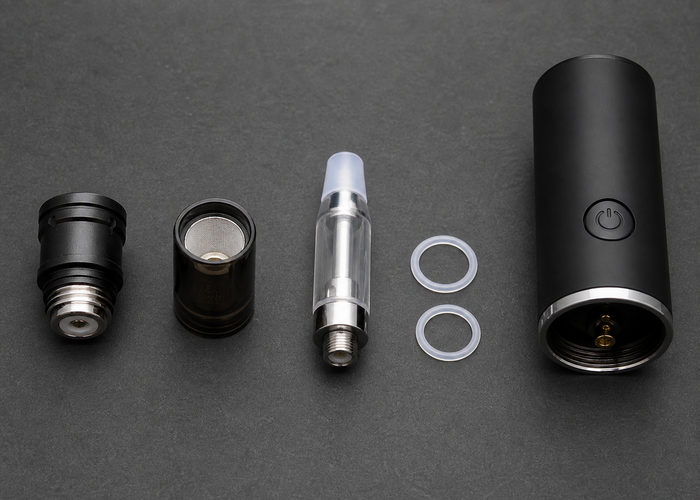
Compatibility starts at the powered base. The control logic must recognize or correctly drive each approved module, the contacts must seat without force, and the housing must leave the intended air path open. If a device uses different adapters for different generations, label them. Never sand, bend or shim a connector to make an attachment sit lower. A stubborn fit is a stop signal, not a challenge. A three-format reference point is the HOOLOO 3-in-1.
Threads can create false confidence. Two parts may start threading together while differing in pin length, airflow location or electrical rating. Tightening until they look flush can crush an insulator or block a vent. Match the exact model and generation in the manual or current product page. If the manufacturer does not list the combination, treat it as unsupported even when online comments say it worked once.
Material compatibility matters inside the chamber as well. A heater designed for a small concentrate load may not control a packed plant chamber, and an air path intended for dry material may collect liquid differently. Unsupported materials can leak, char or reach places that cannot be cleaned. The multi-format claim should include a purpose-built module for each path, not an invitation to place different materials into one generic cup. Why undocumented materials and local hot spots matter is discussed in this public-health study of cartridge heating-element construction.
Each module needs its own inspection. Look for chipped cups, torn seals, loose screens, damaged insulation, bent pins and residue around air holes. Use a bright side light and compare the attachment with a clean reference photo. Do not power a questionable module simply to see whether the base accepts it. Recognition is not proof that a damaged air path or insulator is safe. For coils, contacts and air-path vocabulary, use our atomizer fundamentals guide.
What changes when a third module is added
The third module changes more than the count. It adds another heater profile, another set of wear parts and another opportunity to choose the wrong setting. The interface should make the active mode unmistakable. If three formats share one button and several similar colors, learn the sequence before loading anything. A device that cannot communicate its current mode clearly is a poor candidate for hurried or shared use.
Temperature presets may also mean different things across modules. One level can target a chamber wall in one attachment and a heater near an airflow path in another. Do not assume that the same color or number produces the same physical temperature. Follow the module-specific instructions and begin conservatively. Changing attachment, material and setting at the same time makes an odd result almost impossible to diagnose. For evidence that voltage and actual heater temperature are not interchangeable, review the infrared thermography study of vaporizer heater temperatures.
Warm-up and cooldown vary with mass. A small cartridge adapter may respond quickly, while a larger glass or herb assembly retains heat. The base can feel cool even when the removable module is not safe to touch. Make a parts tray the default landing place and give every attachment its documented cooldown. Swapping a hot module by gripping an insulator can still transfer heat to seals and contacts. For chamber construction and care, read the ceramic versus quartz chamber guide.
Airflow should remain a separate check. Some modules draw through the base; others have side inlets or dedicated mouthpieces. A seal installed in the wrong groove can block a path while the attachment still appears secure. Before heating, take an unpowered test draw if the manual permits it. Resistance that changes sharply after assembly deserves inspection before extra power is applied.
What the extra module really changes
| Ownership question | 2-in-1 | 3-in-1 |
|---|---|---|
| Compatibility | Two documented material paths and fewer interfaces to verify. | A third path adds another connector, heater and instruction set. |
| Cleaning | Fewer modules, but each still needs separate tools and boundaries. | More seals, screens and storage positions to keep identified. |
| Power | Two heater profiles must be supported by the same base. | Three profiles can make control clarity and lockout more important. |
| Value | Good when both formats are used often. | Good only when the third module earns its storage and replacement cost. |
Battery, controls and heat boundaries
Battery specifications must serve the most demanding approved module, not just the smallest one. A base that performs comfortably with a cartridge may work harder with a larger heater. Compare session count and housing temperature across the formats you actually use. If one module drains the battery much faster, plan charging around that reality instead of relying on the best figure printed for the lightest load. A deeper design checklist appears in the FDA technical guidance on battery and device design.
Control clarity is especially important when modules remain warm. The device should power down fully, lock against accidental activation and show errors consistently. Learn whether attachment changes require the base to be off. Do not remove a powered module, and never test bare contacts with metal tools. A modular design gives more access; it does not make the electrical boundary less important. To separate tabletop and portable routines first, see the electric rig versus dab pen comparison.
The charger remains part of the system. Use the specified cable and power source on a hard, clean surface where the device can be watched. Do not charge the base with a warm attachment installed unless the manual allows it. A closed case hides heat and can press the button. Swelling, unusual odor, impact damage or a sudden change in charging behavior means the battery device should be taken out of service.
The extra mode can also create a false economy. A low bundle price may be offset by three replacement chambers, several seal sizes and a specialized case. Price one replacement for every module before deciding. If a third attachment has no documented spare, its value ends with the first cracked glass piece, worn screen or failed heater. Availability is a feature that should be verified, not assumed. The case for replacing damaged modules rather than improvising is supported by this peer-reviewed analysis of hardware-related metals.
Cleaning without cross-contamination
Cleaning tools should be separated by material path. Keep a dry brush for plant particles, appropriate swabs for concentrate residue and a distinct tray for cartridge adapters. This is not about making the kit look clinical. It prevents one sticky module from spreading residue to screens and threads that are meant to stay dry. Color-coded bags or compartments can do the job without putting text on small hot parts. The wet-part and powered-base boundary is shown in our electric rig cleaning guide.
The powered base never belongs in a soaking routine. Remove only approved parts, let them cool, and keep liquids away from ports and contacts. A damp swab offers more control than pouring cleaner. If residue has entered the base or an integrated heater, stop and seek service guidance. Repeated heating is not a drying method and can move contamination deeper into the device.
Dry-herb modules usually need attention at the chamber wall, screen and mouthpiece. Brush loose particles after cooling before they harden into the air path. Do not scrape a coated oven with a metal pick. If the screen is bent or permanently restricted, replace it with the specified part. Forcing a damaged mesh flat can change airflow and allow particles to travel farther into the cooling unit. Charging and battery handling should follow the FDA battery-fire prevention tips.
Concentrate modules often collect residue at rims, cup edges and narrow passages. Use a modest approved load and wipe while the part is cool enough to handle but before residue becomes stubborn. Do not push liquid into a heater cavity. A cracked cup, lifting coating or loose joint is a replacement signal. A multi-format base does not make a failing module worth one more test. A dedicated dry-herb alternative is the P2 B dry-herb pen.
Storage, travel and replacement cost
Storage determines whether the system remains understandable. Every module needs a shaped compartment or labeled container, plus a place for caps, seals and cleaning tools. Keep clean and used parts separate. Glass should not carry cable weight, and small screens should not float loose near electrical contacts. If the supplied case treats all attachments as a pile, budget for a better organizer.
Travel magnifies small mistakes. Prevent accidental activation, pack the battery device according to current carrier rules and protect each attachment from impact. Empty and clean modules before packing. Do not seal a warm or damp part in a case. Laws governing the materials themselves differ by place and remain separate from airline battery rules, so a mechanically travel-ready kit is not automatically lawful everywhere. For storage, damage and disposal reminders, consult the U.S. Fire Administration battery guidance.
Replacement inventory is where modular value becomes measurable. Keep the exact device generation, module name and part number. Similar accessories should not share a bin merely because the threads look alike. For a personal kit, one spare seal set may be enough. For retail or wholesale stock, map every module to its compatible base and remove old claims when a new generation changes the connection. A dedicated concentrate alternative is the P2 A concentrate pen.
Support should be able to answer a fault by module. “The device leaks” is incomplete; identify the attachment, material path, setting, seal position and where residue appeared. “No atomizer” should be followed by the exact module and contact condition. Clear records reduce the temptation to create a duplicate purchase or mix parts while troubleshooting. The goal is to isolate the failed path without risking the working ones.
Retail and wholesale checks
Retail listings should spell out what 2-in-1 or 3-in-1 means in that exact package. Name every attachment, supported material, included mouthpiece and charging accessory. Show all components in one accurate photograph and then show each connector. Avoid a headline that implies universal compatibility. A precise two-format listing can outperform an ambitious three-format page that leaves buyers guessing what the third mode actually requires. Travel preparation should be checked against the FAA PackSafe guidance for battery devices.
Wholesale buyers should ask for spare-part lead times, packaging labels and generation control. A mixed carton with visually similar modules creates support costs long after the sale. Confirm whether the base firmware or control sequence changes by region or production run. If instructions are digital, preserve the version supplied with the shipment. Modular products are manageable when documentation travels with the hardware. Another single-purpose wax reference is the LAVA wax vaporizer.
Returns should be analyzed by path. If one attachment generates most complaints, do not blame the whole concept or continue promoting all three formats equally. Check whether the issue is loading, unclear mode selection, a fragile seal or unavailable replacement. Improving one module's instructions can be more valuable than adding another accessory to the bundle. More parts are not a substitute for a stable routine.
A simple buying test is to remove one module from the comparison. If the 3-in-1 still looks clearly better without its least-used attachment, the remaining advantages may justify it. If the decision collapses, the purchase is being driven by a feature that may never leave the case. Apply the same test to the 2-in-1: if only one path matters, a dedicated device may be cleaner and easier to support. For public-health context beyond the hardware comparison, read the CDC vaping and aerosol information.
The practical verdict
Dedicated devices deserve a fair place in the decision. One body per material means more batteries and chargers, but it also creates obvious cleaning boundaries and simpler controls. A modular system saves space only when its shared base, case and parts remain organized. Buyers who frequently lend, share or rotate equipment may find dedicated formats easier to explain, even if the total kit is larger. Once the module requirements are written down, compare the BT Vapor product collection.
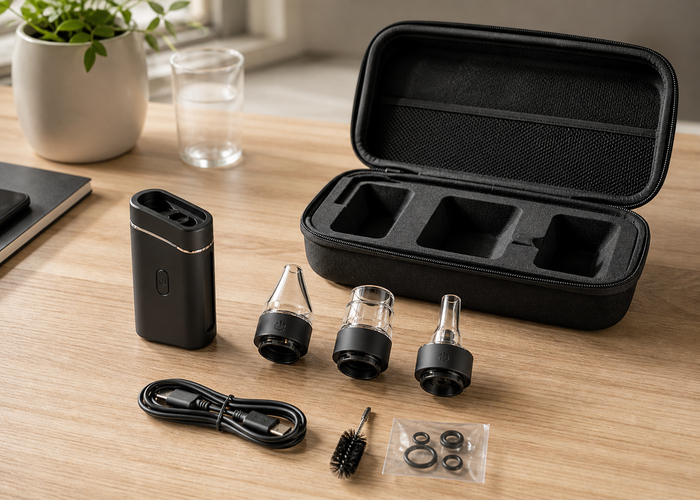
The practical verdict is specific. Choose a 2-in-1 when both supported paths are used regularly, the modules are distinct and replacements are available. Choose a 3-in-1 when the third path is genuinely useful and the extra cleaning, storage and control steps remain acceptable. Choose a dedicated device when clarity matters more than consolidation. The number on the box should describe the routine, not create it.
Before checkout, save the compatibility chart, manual and replacement-part pages. Photograph how the unused modules are stored. Record the charger specification and learn the lockout. If any of those answers is missing, pause the purchase. A good modular platform makes its boundaries obvious; it does not require guesswork about threads, materials or modes.
After a month, judge the system by what happened rather than what was promised. Which modules were used, which were ignored, where residue collected, how often the battery was charged and whether any small part went missing. That record reveals whether consolidation worked. The best multi-format vaporizer is not the one with the highest count. It is the one whose supported paths remain clean, identified and easy to repeat.