
Electric Dab Rig vs Dab Pen: Which Fits Your Routine?
For adults of legal age only. An electric dab rig and a dab pen can heat the same general class of wax concentrates, but they solve different problems. A rig is built around controlled sessions, larger chambers, stable airflow and repeatable settings. A pen is built around portability, quick setup and discreet storage. The best choice is therefore not the device with the longest feature list; it is the format that fits where, how often and how carefully you plan to use it.
This guide compares the two formats without health claims or exaggerated performance promises. Always follow the device manual, local law and the concentrate manufacturer's directions. Keep all devices, accessories and concentrates away from children and pets.
Electric dab rig vs dab pen at a glance
| Decision point | Electric dab rig | Dab pen |
|---|---|---|
| Best setting | Home, desk or planned group session | Travel, short personal session or compact kit |
| Temperature control | Often several presets or direct adjustment | Usually fewer voltage or heat levels |
| Chamber and airflow | Larger path and more parts | Small chamber and short path |
| Cleaning effort | More components, easier access to some parts | Fewer parts, but a tighter chamber |
| Battery and charging | Larger battery, larger device | Smaller battery, easier to carry |
| Learning curve | More setup and settings | Faster start, less fine control |
What an electric dab rig changes
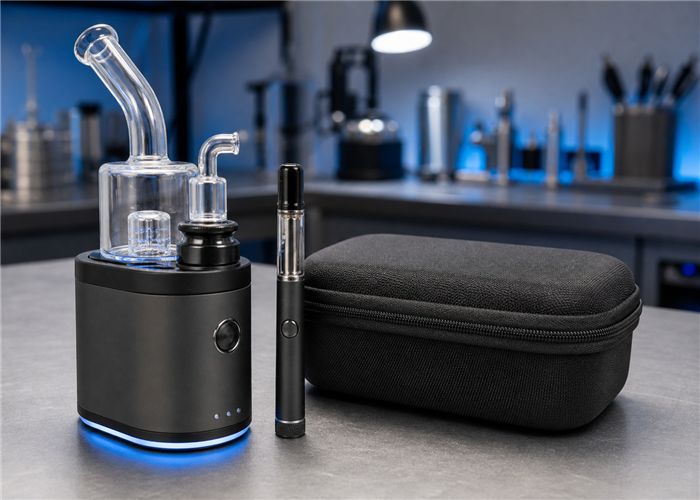
An electric rig combines a powered base, a heating chamber and an air or glass pathway. Compared with a pen, the body has room for a larger battery, more visible controls and a wider heating assembly. That makes a rig attractive when repeatability matters. You can choose a heat level, allow the chamber to reach its operating state and use a similar routine each time.
The tradeoff is maintenance. Glass, seals and the chamber all need inspection. A rig also needs a flat, safe surface and thoughtful packing. If your routine is mostly at home, those requirements may be reasonable. If you regularly put the device in a pocket or small case, they may feel burdensome.
When a rig is the practical choice
- You want clearly separated temperature presets or real temperature control.
- You prefer a stable tabletop format and a longer air path.
- You are willing to clean the chamber and glass on a schedule.
- You value battery capacity more than pocket size.
- You want one device that may support more than one compatible material, but only when the manufacturer explicitly allows it.
BT Vapor's Apex electric rig lists a 4000mAh battery and four temperature modes. The I-MAGMA 2-in-1 lists a 1600mAh rechargeable battery and smart temperature control. Treat those specifications as selection inputs, not promises that either format is right for every user.
What a dab pen changes
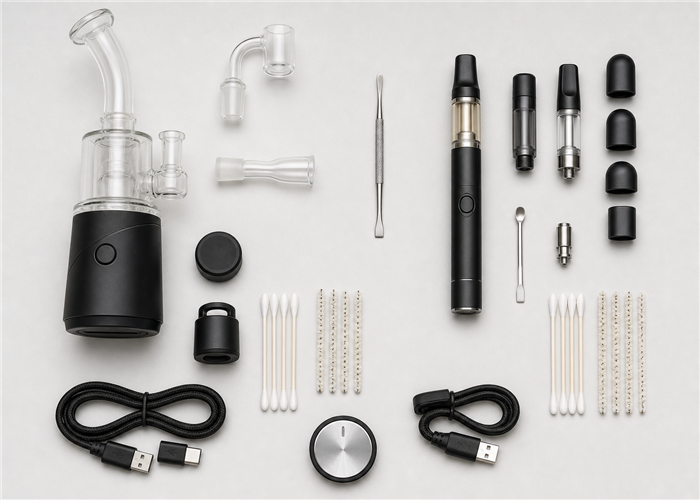
A dab pen places the battery, controls and concentrate chamber in a narrow body. The format reduces setup time and makes storage simple. It can be a better match for an adult user who values short sessions, predictable packing and minimal glass. Pens also make it easier to keep a complete kit together: device, cable, cleaning swabs and spare seals can fit in one compact case.
For the primary-source overview behind this point, read FDA overview of vapes and ENDS.
Small dimensions create their own limits. The chamber has less room, the air path is shorter and residue can affect airflow quickly. A small battery may require more frequent charging. Heat settings may be broad rather than precise. None of these points is automatically negative; they are simply constraints to compare with your routine.
When a pen is the practical choice
- You prioritize portability and fast setup.
- You usually prepare one small personal session at a time.
- You can clean a tight chamber before residue hardens.
- You prefer a simple interface over extensive adjustment.
- You need a device that fits a protected travel case.
The Voozr P2 A concentrate pen is a straightforward pen-format option. The Voozr Spark lists a 0.5ml closed wax chamber, quartz heating, a 460mAh rechargeable battery and a display. Compare compatible material, chamber access and charging requirements before comparing appearance.
Temperature control: precision versus simplicity
Temperature controls only help when they are understandable and repeatable. A rig may offer four presets or direct adjustment, but the chamber material, load size and cleaning condition still affect the result. A pen may offer fewer voltage levels, which can be easier to learn but less granular. Start with the lowest manufacturer-recommended setting, observe the device, and change one variable at a time.
The clearest official background is in CDC e-cigarette information; check it before relying on an old forum answer.
Avoid treating high temperature as a shortcut. Excess heat can darken residue, increase cleaning work and stress seals or chamber surfaces. If performance changes, let the device cool, inspect airflow and clean it rather than repeatedly increasing power.
Cleaning and ownership cost
Ownership cost includes replacement chambers, seals, swabs, cleaning liquid, charging cables and the time required for care. A rig can have more washable parts, while a pen can have fewer but less accessible parts. Before buying, check whether the chamber is replaceable, whether the glass is removable, which parts can contact isopropyl alcohol, and whether replacement pieces are available.
For the agency's current wording and diagrams, keep CDC device and aerosol overview with your device notes.
Use our electric dab rig cleaning guide for a detailed routine. Never soak an electronic base, never charge a wet device and never scrape a chamber with a tool that can damage its coating.
Battery and travel safety
Use the supplied or manufacturer-approved charging equipment, inspect the cable and device for damage, and charge on a clean hard surface away from heat. The U.S. FDA publishes practical guidance on avoiding vape battery fires and explosions. When traveling, check carrier and local rules before packing any battery-powered vaporizer.
A rig's larger battery can support more planned sessions, but the larger glass assembly needs protection. A pen is easier to pack, but its small body should still be stored so the activation control cannot be pressed accidentally. Turn the device off, cap the chamber, and keep it separate from loose metal objects.
A useful independent technical reference here is CDC visual dictionary of device parts.
A simple decision framework
- Choose the setting. Mostly home use favors a rig; frequent movement favors a pen.
- Choose the control level. If repeatable presets matter, compare rigs. If simple heat levels are enough, compare pens.
- Audit maintenance. Select only a design you can disassemble and clean according to its manual.
- Check compatibility. Never assume a device supports dry herb, oil or cartridges unless its product documentation says so.
- Plan storage. Include the device, charger, cleaning tools and protective case in the decision.
Final verdict
Choose an electric dab rig when controlled tabletop sessions, battery capacity and a longer air path matter more than pocket size. Choose a dab pen when portability, quick setup and a small personal kit matter more than granular control. If you are still uncertain, compare the exact specifications in the BT Vapor product collection and rank them against your own setting, maintenance tolerance and charging routine. The right format is the one you can operate, clean and store consistently.
The question I would ask before comparing specifications
Picture the ordinary Tuesday-night version of ownership, not the first day with a new device. Where will it sit? How long do you actually have to let it cool? Will the glass be washed that evening, or will it wait until the weekend? Those answers usually separate rig buyers from pen buyers more reliably than a list of modes. If the device will live on a desk, the larger Apex e-rig format can be reasonable. If everything must fit in a small case, the slimmer P2 A concentrate pen deserves the closer look.
There is also a middle ground. The I-MAGMA 2-in-1 is useful to compare when one body is expected to cover more than one explicitly supported format, while the Spark quartz-heating pen represents a much more compact approach. Compatibility has to come from the current product instructions; a connector that physically fits is not proof that two parts should be used together.
What the first month of ownership tends to reveal
A rig asks for space. You need somewhere safe for the base, glass, cable, swabs and removable seals. In return, controls are easier to see and a glass path is often easier to inspect. A pen asks for discipline of a different kind: loads are small, passages are narrow and a quick wipe while the chamber is still merely warm can save a stubborn cleaning job later. Our electric dab rig cleaning routine shows why that distinction matters.
When the safety details matter, go directly to FDA vape-battery safety tips.
If you are comparing several categories rather than two individual devices, browse the BT Vapor collection first, then open only the models that meet your compatibility and charging requirements. The LAVA wax vaporizer and HOOLOO 3-in-1 offer two other reference points for size and multi-use positioning. For dry herb rather than concentrates, use the P2 B dry-herb pen as a separate comparison; do not blur material categories just to make a table look complete.
A less glamorous but more useful buying test
Set a timer for the amount of time you are genuinely willing to spend after a session. With two minutes, a simple pen and accessible chamber may be the honest fit. With ten minutes and a fixed work surface, a rig's removable glass and seals are less of a burden. Then price one replacement chamber, one spare seal set and one suitable case. That small exercise exposes ownership cost better than headline battery capacity.
For travel or storage decisions, compare the product manual with FDA electrical-safety presentation.
For readers who want the engineering vocabulary behind these parts, the older atomizer and heating-chamber explainer is the right background. If chamber material is the sticking point, continue with the ceramic-versus-quartz comparison rather than treating every white or clear cup as identical.
Questions buyers usually ask after the comparison
Does a bigger battery automatically mean a better device?
No. Capacity only becomes useful when charging logic, heater demand, size and your session pattern also make sense. A larger battery can add weight and charging time. Check the manual and the exact product listing, then decide whether the extra capacity solves a real problem.
Is a dab pen maintenance-free?
No. It has fewer visible pieces, but the small chamber and short air path can collect residue quickly. The routine is shorter, not optional.
Can one device handle wax, dry herb and cartridges?
Only when the manufacturer states that the specific body, chamber and adapter support those materials. Never infer compatibility from shape alone.
The underlying material or component terminology is covered by FDA manufacturer guide to ENDS design issues.
Which format travels better?
A pen is usually easier to pack, yet airline and carrier rules still apply to its lithium battery. A rig needs more protection for glass and loose components. Turn either device off and prevent accidental activation.
Run the comparison with your own routine
Start with location. A device that is technically portable can still be awkward if its glass, cable and cleaning kit need separate protection. Write down the three places where you expect to use or store it most often. A fixed table with an outlet favors a rig. A small locked case and short sessions favor a pen. If one location is a vehicle, remember that extreme heat and cold are hard on batteries and seals; the correct answer may be to leave the device at home.
Next, count controls rather than admiring them. More settings are useful only when you can explain what each one changes. A clear three-level interface can be more practical than a dense display that you never adjust. During comparison, note how the device confirms power, heating, cooldown and low battery. Those signals matter in a dim room and when a session is interrupted.
For a second check from a non-commercial source, use FAA lithium batteries in baggage.
Then look at the air path. A removable glass section gives you visual access but adds a fragile part. A short pen path is compact but can become restrictive with a small amount of residue. Check where condensation will collect and whether a swab can reach that point without touching the heater. This is the sort of detail that photographs often reveal better than feature lists.
What to ask before ordering replacement parts
Ask whether the chamber is considered a consumable, whether seals are model-specific, and whether the charging cable uses a common connector. Confirm that replacement glass is still available for the exact generation. A low device price is less appealing if one minor broken part takes the whole system out of service.
For a wholesale or shared inventory, consistency matters even more. Two devices with the same marketing name can have revised internals, so record the generation, chamber code and compatible accessories. Keep replacement parts labeled by model instead of storing similar-looking seals together. That small habit prevents forced fits and misleading support advice.
If regulations or recommendations have changed, FAA PackSafe battery guidance is the page to recheck.
How to make a fair first-week assessment
Use one variable at a time. Begin at the lowest manufacturer-recommended setting, keep the load modest, and use the same cleaning routine after each session. Do not judge battery life from the first charge alone. After several normal cycles, note charging time, number of sessions, residue location and whether the controls still feel intuitive.
A good device should become easier to live with as you learn it. If the routine becomes more complicated—more heat to compensate for restricted airflow, more force to remove a chamber, more frequent connection errors—stop and inspect rather than adapting to a developing fault. The useful comparison is not the biggest cloud on day one; it is the least troublesome routine after several weeks.
One final source worth bookmarking is U.S. Fire Administration lithium-ion battery guidance.
One final way to break a tie
Imagine handing the device to an adult owner who has never seen it. Which format can you explain accurately in two minutes, including power-off, charging, cooling and cleaning? The easier explanation usually points to the design with fewer hidden assumptions. If both pass that test, choose on replacement-part access and storage rather than appearance.
Before you decide
Read the warranty and support terms, then save a copy of the manual. Confirm the charger, chamber and glass included in the box. Check that the device can be locked or fully powered down for storage. If a seller cannot identify replacement parts, treat that as part of the price.
Finally, be honest about frequency. An occasional home user may prefer a rig that stays assembled in one safe place. A frequent traveler may value a pen but should expect to inspect and clean its narrow path more often. The format should reduce friction in a safe routine, not encourage shortcuts.
A short ownership checklist
Whichever format wins, record the model, chamber type and charging specification before the packaging disappears. Keep the device manual with the cleaning kit. After the first week, review what actually caused inconvenience: carrying size, cooldown time, charging frequency, glass handling or chamber access. That evidence is more useful than trying to defend the original purchase decision.
If none of the current options fits without compromise, waiting is a valid choice. A device that is difficult to clean, store or explain will not become a better fit simply because it is on sale.
For chamber care, battery handling, storage and a full ownership checklist beyond this format comparison, continue with the complete electric dab rig guide.