
Ceramic vs Quartz Heating Chambers for Wax Vaporizers
For adults of legal age only. Ceramic and quartz are both common chamber materials in wax vaporizers, but the material name alone does not predict the whole experience. Chamber thickness, heater placement, airflow, temperature control and residue condition can matter as much as the surface itself. Use this guide to ask better questions rather than treating one material as universally superior.
Ceramic vs quartz in one table
| Factor | Ceramic chamber | Quartz chamber |
|---|---|---|
| Heat response | Often gradual and even | Often fast and direct |
| Heat retention | Can retain warmth longer | Can cool more quickly |
| Surface visibility | Opaque; residue shows as discoloration | Transparent or translucent; residue is easy to see |
| Care risk | Coatings can scratch or chip | Glass can crack from impact or thermal shock |
| Best fit | Steady sessions and broad heat distribution | Quick response and short controlled sessions |
How ceramic chambers behave
Ceramic is an electrical insulator that can distribute heat across a shaped surface. In a vaporizer chamber, that often creates a less abrupt temperature change than a thin quartz cup. A thicker ceramic body may take longer to warm and longer to cool. This can support a measured session, but it also means residual heat continues after power is reduced.
Not every white chamber is the same. Some are solid ceramic; others are ceramic-coated metal. A coating can be thin and efficient but should never be scraped with a sharp tool. If you see a chip, crack or flaking surface, stop using the chamber and consult the manufacturer.
How quartz chambers behave
Quartz is a crystalline form of silica used for its heat resistance and cleanable glass-like surface. A compact quartz cup can respond quickly to a heater and may cool faster than a heavier ceramic assembly. That responsiveness can make timing important: a small change in power or load may be noticeable sooner.
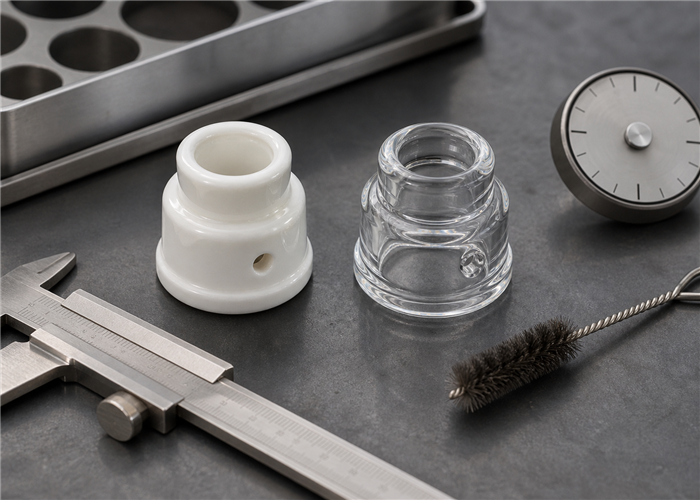
Quartz is not unbreakable. Impact, twisting during disassembly and rapid hot-to-cold changes can cause damage. Let the chamber cool naturally before cleaning. Inspect the rim and base under good light; hairline cracks are a reason to replace the part.
Flavor and material claims
Marketing often presents chamber material as a guarantee of flavor. A more accurate view is that the surface is one part of a system. Old residue, blocked airflow, an unsuitable temperature and too much material can overwhelm any difference between ceramic and quartz. A clean, correctly loaded chamber at an appropriate setting is the fair way to compare designs.
For the primary-source overview behind this point, read PubChem quartz reference.
Avoid claims that either material is healthy, toxin-free or medically safer. Vaporizer use is not risk-free, and product selection should not be framed as a health treatment. The CDC and FDA provide current information on e-cigarettes and other electronic nicotine delivery systems; local rules and the device category may differ.
Heat-up speed versus control
Fast heat-up is useful when you want a short session, but it can reduce the time available to notice an aggressive setting. Slower response may feel more forgiving, yet retained heat can continue cooking residue after activation stops. The correct comparison is therefore not “fast is better” or “slow is better.” It is whether the chamber behavior matches the control system and your routine.
The clearest official background is in PubChem silicon dioxide reference; check it before relying on an old forum answer.
Choose ceramic when
- You prefer gradual, broadly distributed heating.
- You are comfortable allowing a short preheat and cool-down.
- You clean with soft tools and avoid scraping coatings.
- You value a robust opaque cup and consistent routine.
Choose quartz when
- You value rapid response and visual inspection of residue.
- You use short, carefully timed sessions.
- You can protect glass from impact and thermal shock.
- You are prepared to replace a cracked chamber promptly.
Cleaning differences
Both materials should cool before cleaning. Start with a dry swab. Use a lightly dampened swab only when the product manual permits the cleaning liquid. Ceramic needs protection from abrasion; quartz needs protection from impact and abrupt temperature changes. Do not soak an electronic chamber module, and never power a device while cleaning liquid is present.
For a complete disassembly and drying workflow, read How to Clean an Electric Dab Rig. Cleaning frequency depends on session size and residue, not a fixed calendar. A small quick clean after use is usually easier than removing hardened buildup.
Device examples
The Voozr Spark lists quartz heating in a compact 0.5ml closed wax device. The Voozr P2 A is another concentrate-pen format to compare for chamber access, controls and maintenance. The LAVA wax vaporizer lists a 1000mAh battery, four heat settings and 3D heating. Confirm the current chamber specification on the product page or manual before purchase.
Five questions before choosing
- Is the chamber removable? Replaceability can matter more than material.
- How many heat settings are available? Material and controls should be evaluated together.
- Can you see and reach the air holes? Serviceability affects long-term consistency.
- What cleaning method is approved? Do not assume alcohol compatibility.
- Are replacement parts available? A chamber is a wear component, not a permanent promise.
Final recommendation
Ceramic is a sensible choice for adults who prefer gradual heating, even distribution and a steady routine. Quartz is a sensible choice for adults who value quick response, visual inspection and short controlled sessions. Neither wins in isolation. Compare the complete device—heater, airflow, controls, battery, replacement parts and cleaning access—inside the BT Vapor collection. Then choose the chamber you can operate and maintain consistently.
For the agency's current wording and diagrams, keep NIST mechanical and thermal properties of ceramics with your device notes.
Why the label on the chamber is only the beginning
Two “ceramic” chambers can behave differently because one is a thick cup and the other is a thin coating over metal. The same problem appears with quartz: wall thickness, heater contact and airflow change the response. I would rather know the exact construction and replacement cost than see another broad claim about purity or flavor.
The Spark product page explicitly identifies quartz heating, which makes it a useful concrete example. The P2 A concentrate pen and LAVA wax vaporizer are better used as whole-device comparisons: check the current chamber specification before assigning either to a material column. The atomizer explainer provides the coil, wick and chamber vocabulary behind this distinction.
What “fast heat-up” feels like in ordinary use
Fast response shortens the pause between pressing a control and reaching the selected operating state. It also gives less time to notice that a load is too small, residue has built up or the chosen level is aggressive. A slower, heavier ceramic cup can feel calmer, but retained heat continues after power stops. Neither behavior is automatically better; each asks for a different rhythm.
A useful independent technical reference here is USGS 2026 quartz summary.
That is why I compare chamber material after choosing a device format. The electric rig versus dab pen guide separates tabletop and portable routines first. A reader who prefers a rig can then compare the Apex and I-MAGMA; someone prioritizing a compact kit can stay with pen-format options. This keeps the material decision in proportion.
Inspection tells you more than color
On ceramic, look for chips, hairline cracks, flaking or a rough patch that was not present when new. On quartz, rotate the cooled cup under side light and inspect the rim and base for a line that catches the light differently. Staining alone is not the same as structural damage. Scraping until a chamber looks factory-new can cause more harm than leaving a harmless mark.
For the actual care sequence, use the electric dab rig cleaning guide. The older burnt-taste and care guide is more appropriate when the symptom may involve airflow, a wick or residue elsewhere in the device. The BT Vapor collection can then be filtered by the maintenance routine you are willing to keep.
A buyer's five-minute bench test
Before the first full session, learn how the chamber seats, where its air holes are and how it will be removed after cooling. Confirm the lowest recommended setting. Check whether a replacement is sold as a complete module or as a cup. Finally, read the cleaning restrictions. These five minutes reveal whether the device and your habits are likely to get along.
Material questions that marketing copy rarely answers
Does clear quartz mean I can see every problem?
You can often see residue more easily, but heater contacts and air passages may still be hidden. Visual access helps; it does not replace inspection of the whole assembly.
When the safety details matter, go directly to CDC visual dictionary of vaporizer components.
Is a ceramic coating the same as solid ceramic?
No. Construction, thickness and support material differ. Ask for the exact part description and do not use a cleaning method based on color alone.
Which material lasts longer?
There is no responsible universal answer. Impact, thermal shock, coating quality, cleaning tools and replacement design all influence service life.
Can I switch chamber materials in the same device?
Only when the manufacturer lists the alternate chamber as compatible with that exact device. Matching threads or dimensions are not sufficient evidence.
For travel or storage decisions, compare the product manual with FDA ENDS and component overview.
Separate material behavior from device behavior
To compare two chambers fairly, keep the device, setting, load size and cleaning condition as consistent as the manufacturer allows. Otherwise a fresh quartz cup may be compared with a coated ceramic chamber that already has residue, and the conclusion will say more about maintenance than material. Write down the variables before deciding what you felt.
Heater geometry matters. A cup heated from beneath can create a different temperature pattern from one heated around the wall. Air entering near the base changes how heat and material move. The control algorithm may pulse power rather than deliver it continuously. These design choices sit between the material and the experience, which is why broad online claims rarely transfer perfectly from one model to another.
Understanding retention without turning it into a slogan
A chamber that retains heat may support a steady session, but it also continues to warm residue after the button is released. A chamber that cools quickly can make short sessions easier to time, yet it may demand more attention to loading and setting. Neither behavior removes the need for a cooldown period before cleaning.
Thickness complicates the comparison again. A thick quartz component can retain more heat than a very thin one, while a lightweight ceramic coating can respond faster than a heavy solid cup. When a listing says only “ceramic” or “quartz,” ask for construction details instead of assuming the familiar stereotype.
The underlying material or component terminology is covered by FDA electrical-safety presentation.
What wear looks like
Residue is usually removable or manageable; structural damage is not. Ceramic damage can appear as a chip on the rim, a flake in a coated area or a crack that collects residue. Quartz damage may appear as a bright line, chipped edge or loosened joint. Inspect only when the chamber is clean, cool and dry.
Do not use a needle or blade to test a suspicious line. Magnified light is safer. If the mark changes when the chamber is rotated, or if an edge can be felt with a soft swab, stop using the part and contact the manufacturer. A replacement is cheaper than trying to prove a damaged chamber can survive one more session.
Cleaning choices should follow construction
A solid removable cup may allow a different method from an integrated heater module. A coated surface may prohibit soaking even though the underlying material sounds familiar. Use a dry swab first, then the least aggressive approved method. Alcohol compatibility must be stated by the manufacturer; it should not be inferred from the word “quartz” or “ceramic.”
Thermal shock deserves equal attention. Let the chamber cool naturally before it touches cleaner or rinse water. Sudden temperature change can stress glass-like materials and the joints that hold them. This is especially important when a chamber looks cool at the rim but retains heat near the heater.
For a second check from a non-commercial source, use FDA technical guidance for ENDS components.
Choosing for a retail or wholesale assortment
Stocking both materials can make sense when the distinction is explained honestly. Product descriptions should name the construction, compatible device, replacement process and approved care method. Avoid ranking one as universally cleaner or safer. Clear support information reduces returns better than a dramatic material claim.
Keep spare chambers in labeled protective packaging and record the device generation. Similar dimensions do not establish electrical or thermal compatibility. When a product line changes, review old accessory copy so an earlier chamber is not presented as suitable for a revised body without documentation.
The sensible conclusion
Choose the complete system, not the material word. Quartz often suits people who value visible residue and quick response. Ceramic often suits people who prefer broader, steadier heating. But access, controls, replacement parts and cleaning restrictions decide whether those tendencies matter in daily use. If a manufacturer cannot answer those practical questions, the chamber material should not rescue the purchase.
Questions to put to a supplier
Ask whether the chamber is solid, coated or part of an integrated module. Request the compatible device and generation, normal replacement procedure, approved cleaning liquid, and the signs that require replacement. These answers are more useful than a generic promise about flavor.
If regulations or recommendations have changed, CDC e-cigarette information is the page to recheck.
For a display or catalog, photograph the actual chamber rather than a stylized substitute. Show the opening, base and connection. Accurate images help customers distinguish a replacement cup from a complete powered module and reduce incompatible orders.
Does chamber color prove its material?
No. White, clear or dark surfaces can come from different constructions and coatings. Use the technical description.
One final source worth bookmarking is U.S. Fire Administration lithium-ion battery guidance.
Is one material automatically easier for beginners?
Not necessarily. Clear controls, modest settings, accessible cleaning and available replacements matter more than the material name alone.
Make the comparison repeatable
If you have access to both chamber types in manufacturer-approved configurations, keep notes over several normal sessions. Record the device, setting, load size, warm-up behavior, cooldown time, residue location and cleaning effort. Do not switch several variables at once. A repeatable observation is more valuable than a dramatic first impression.
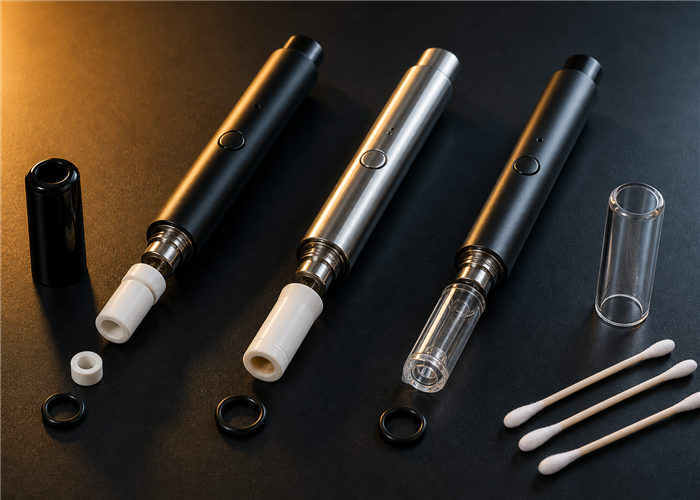
Pay attention to the end of the session as much as the beginning. Retained heat, residue at the edge and the time before safe cleaning shape ownership. A fast initial response can be convenient, while easy inspection may save time later. The balance matters more than one isolated characteristic.
When not to keep comparing
Stop using a chamber if it is cracked, chipped, loose, incorrectly seated or paired with a device the manufacturer does not list as compatible. Stop if contacts overheat or errors persist after approved cleaning. Material curiosity should never override visible damage or electrical warnings.
When both chambers are intact and supported, choose the one whose full routine you can maintain: sensible setting, modest load, patient cooldown, gentle cleaning and accessible replacement. That is the practical difference a buyer can live with.
After comparing chamber materials, use the broader electric dab rig guide to check controls, glass, cleaning, batteries and replacement support as one system.